Friday, January 21, 2011

Didgeridoo crafts, eucalyptus wood, pvc, bamboo and glass didgeridoos. Solely made in Malaysia


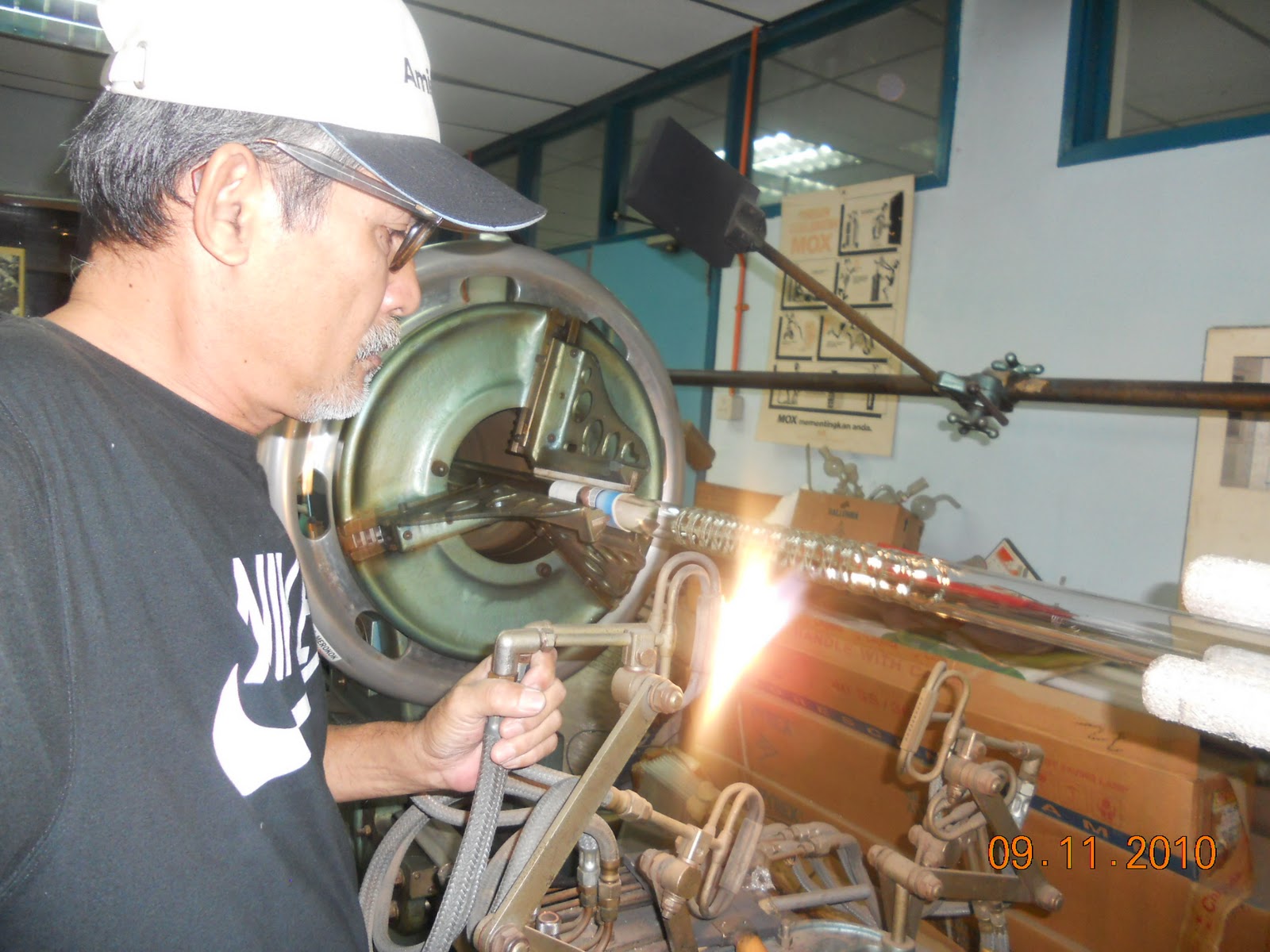
In the previous post, I did mention about glass didgeridoo and only now I had the opportunity to briefly explained how it is made. The didgeridoo is made from 40mm borosilicate ' Pyrex' glass tubing with the standard length of 1500mm. To bend  the glass, a combination of oxygen and butane gas at a suitable pressure will produce a high temperature flame that will soften the glass. Glass could be bent when the glass soften. To produce a good bending and to maintain an even thickness of the inside wall, the flame and the glass should be controlled while shaping is being done. When too much heating on  the glass, it will collapse and insufficient heating will create a bulge on the bent. This is not an easy thing to do and  you will need years of practice to perfect the job.  For that matter, glass didgeridoo is not cheap to produce.

Glass  didgeridoos
Glass didgeridoo sounds much better than PVC didgeridoo but much attention is needed in keeping it in one piece. Don't knock it on hard surface! Glass didgeridoo is not as versatile as other types of didgeridoos but it is good to add one as your didgeridoos collection.

To make the glass didgeridoo more attractive, I intend to wrap it with woven rattan or woven 'mengkuang' leaves (the leaves are normally made into floor mat as used in traditional Malay homes) with colorful motifs and designs.  It will become a truly Malaysian didgeridoo.

By now you should have seen the didgeridoo made in Bali, Indonesia.  It is made with beautiful  and colorful motifs that represent the rich innovative ideas of  Indonesian craftsmanship.  Anyway, we still salute the didgeridoo made by the aborigines of the land down under.

After promoting didgeridoo 'Made in Malaysia' for the past few months, I'm surprised to know that there are many  excellent didgeridoo players in Malaysia.  They have been playing (busking, the better word) all over Malaysia and it  is good to see that the music adopted from Australia is being accepted as a new wave of music by the Malaysians.

Fabricating glass didgeridoo using a lathe machine
Shaping and bending glass didgeridoo
   A friend trying out the
newly made wood didgeridoo  
A lady trying hard to blow
the glass didgeridoo


Grinding a wood didgeridoo
Painting the didgeridoo
Finishing done by my son   
A good start, a bamboo didgeridoo 

Tuesday, October 19, 2010

Welcome to all didgeridoo enthusiast and see for yourself handmade eucalyptus, glass and pvc didgeridoo solely made in Malaysia


eucalyptus plantation, didgeridoo is made from this tree

The didgeridoo (also known as a didjeridu or didge) is a wind instrument developed by Indigenous Australians of northern Australia at least 1,500 years ago and is still in widespread usage today both in Australia and around the world. It is sometimes described as a natural wooden trumpet or "drone pipe". Musicologists classify it as a brass aerophone.A modern didgeridoo is usually cylindrical or conical, and can measure anywhere from 1 to 3 m (3 to 10 ft) long. Most are around 1.2 m (4 ft) long. The length is directly related to the 1/2 sound wavelength of the keynote. Generally, the longer the instrument, the lower the pitch or key of the instrument.

Didgeridoo had now been played in Malaysia and has gain its popularity among young musicians and enthusiast . Didgeridoo is not easily available locally, so for  that matter, I started making my own didgeridoo from pvc pipe. I started fabricating the instrument without much  knowledge to refer to. Anyway, the  instrument turned out wonderfully. Later, my next project is to fabricate a glass didgeridoo. Equipped with a little knowledge on glassblowing, fabricating a glass didgeridoo is not as difficult as you  might think of. The didgeridoo is made from 40mm x 120cm glass tubing. The blowing end is slightly tapered for  comfortable blowing and the other end is flared.  The sound created  from glass does not differ much if  compared to pvc and wood didgeridoo.  

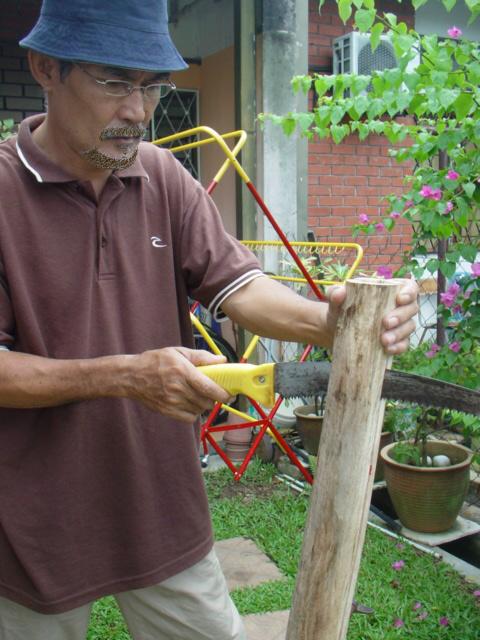
My final project is to make a wood didgeridoo from eucalyptus tree. This is the most challenging task. The trunk has got to be cut into two halves and  much effort is applied in making the dug-out, grinding, sanding, gluing and finally the coating of the wood.  The result, the eucalyptus didgeridoo came out beatifully and it may be considered  as my very own masterpiece. Fortunately, there are local didgeridoo enthusiast that volantarily test the instruments and gladly I passed with flying colours.  


eucalyptus trunks ready for didgeridoo making


Applying special glue


dug out wood


clamping the glued wood
 

applying wood  finish


Beehive wax


Applying beehive wax for mouthpiece
 

various types of didgeridoos


playing didgeridoo


my son can play didgeridoo too

fantastic didgeridoo player, MUSANK

another fantastic didgeridoo player


Anyone interested in getting a didgeridoo please contact me or view at Bazarena Shah Alam (morning  market) every Sundays.